Bending & pricing
What changes the price of a bent part?
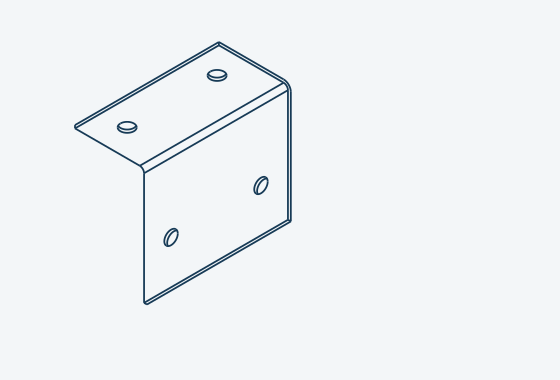
A bent part includes more than the laser-cut blank. The quote also accounts for brake setup and a bending allowance for each part.
On this page
Separate the blank, the setup, and the bending
Two parts can use similar amounts of material and still have different formed prices. One may need a single bend with straightforward handling; another may need several bends. Quantity also matters because the setup is shared across the parts in that quote line.
| Input | What to check |
|---|---|
| Laser-cut blank | The profile, cutouts, material, and thickness still contribute to the quote. |
| Bend count | Compare the detected bends with the finished model. |
| Brake setup | This is spread across the quantity in the quote line. |
| Part weight | The quote model uses a higher bending allowance above 50 lb. |
| Manufacturability | Tool access, geometry, and other requirements may need shop review. |
Bend count and weight work together
The current quoting model allows one minute per detected bend for parts weighing 50 lb or less, and two minutes per bend above 50 lb. These are pricing allowances. They are not promised shop cycle times, delivery times, or handling limits.
| Detected bends | 50 lb or less | Over 50 lb |
|---|---|---|
| 1 bend | 1 minute | 2 minutes |
| 3 bends | 3 minutes | 6 minutes |
This is why removing an unnecessary bend can change a quote even when the flat blank barely changes. Keep every bend needed for fit, stiffness, or function. If the detected bend count does not match the design, request review instead of treating the displayed price as the final answer.
Check thickness first, then compare quantities
Thickness affects the amount of material and the part’s weight. It also matters to whether the finished geometry can be formed as intended. Select the thickness the design actually requires; changing it only to reduce a quote can change the fit and performance of the part.
For an otherwise identical quote line, a setup charge is shared across the quantity. At quantity 1, one part carries the whole setup. At quantity 5, each part carries one fifth; at quantity 25, one twenty-fifth. That does not mean the total unit price falls in those same proportions: material and per-part operations remain.
Review the finished part before ordering
- Upload the formed STEP model for the part you want made.
- Check the preview, dimensions, material, thickness, quantity, and detected bends.
- Provide drawing requirements that the model does not capture, including critical tolerances or added operations.
- Read any shop-review status before moving ahead. A review is where unclear or unsupported details are resolved.